
Construction payment applications:
Are poor processes costing contractors more than they think?
Applications for payment might look like an administrative process. But new research suggests the way contractors manage them can have much wider commercial consequences.
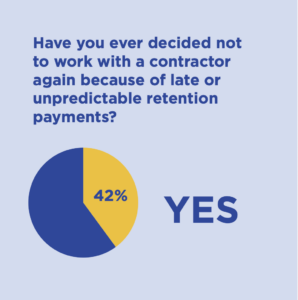
Payapps’ 2026 research into the state of UK subcontractor payments found that 79% of subcontractors say they wait longer than they should to get paid, 73% experience construction payment process disputes, and 42% would turn down future work with a contractor that pays late.
For subcontractors, that means pressure on cashflow, more administration and frustration.
For contractors, the implications could include higher prices, fewer subcontractors willing to bid and greater pressure on already stretched commercial and finance teams.
Payment is becoming a commercial issue for contractors
Payapps surveyed 127 UK subcontractors to understand their experience of applications for payment, from administration and compliance to contractor relationships and technology.
One finding should particularly interest commercial teams: 84% say a contractor’s payment reputation influences their decision to bid for or price future work, while 68% have increased their rates or added risk margin because of slow or unreliable payments.
And it isn’t only late payment in construction that matters.
Almost a third (29%) have avoided working with a contractor because its application for payment process was too difficult.
That raises an important commercial question: could the way you manage applications for payment be affecting both what subcontractors charge and whether they want to work with you at all?
Download the 2026 subcontractor payment research report
How much time is construction payment admin consuming?
The research also reveals the administrative burden behind getting paid.
More than half (55%) of subcontractors spend upwards of 20 hours a month on general admin, while each application for payment takes an average of 1.5 hours to prepare and submit. For 15%, a single application takes more than three hours.
Inconsistent processes add to that burden. 67% still prepare most applications using spreadsheets and 37% work across multiple systems depending on the contractor.
Contractor teams are feeling the strain too. Separate research into construction finance professionals also referenced in the report, found that a typical five-person contractor finance team manages 210 subcontractors and spends an average of 73 hours a month on subcontractor payments.
For finance leaders, that’s valuable time that could potentially be spent on analysis, forecasting and managing commercial risk rather than keeping manual processes moving.
Why do construction payment disputes happen?
Almost three quarters (73%) of subcontractors surveyed say payment-process disputes arise sometimes or often.
The three most commonly reported causes are variations not agreed (79%), disagreements over the valuation of completed work (74%), and slow responses or approvals (61%).
Clarity appears to be part of the problem. Almost half (49%) say the application information contractors provide is only sometimes, rarely or not at all clear.
The result can be more chasing, corrections and disputes for both sides – precisely the activity busy commercial and finance teams could do without.
What do subcontractors want from contractors?
The research points to a surprisingly straightforward answer: clarity and consistency.
Some 85% of subcontractors say clear and consistent payment schedules give them greater confidence in a contractor’s payment process, while 77% value a strong track record of paying on time.
Technology has a role to play, but consistency matters here too. 80% say differences between contractor systems are a reason they don’t use digital tools for applications for payment, while 65% say having one system across projects would make payment technology more appealing.
The opportunity isn’t simply to digitise an existing process. It’s to create a more consistent and transparent one.
Could better payment processes become a competitive advantage?
For contractors competing for reliable subcontractor capacity, payment experience could increasingly become a differentiator.
A clear, consistent process can reduce friction for subcontractors while giving contractor teams greater visibility and control. The report explores how this can affect administration, disputes, compliance, cashflow and supply-chain relationships – as well as what subcontractors themselves think about digital payment processes.
For commercial and finance leaders, it provides a different perspective on a process that can easily be dismissed as back-office administration.
For subcontractors, it shows how their experiences compare with businesses across the UK – and where the industry has an opportunity to improve.
Applications for payment aren’t just about getting money from A to B. How well contractors manage the process can affect cost, risk and the strength of the supply chain.