
Think about the last dispute on your construction project. Not when it escalated. Not when it became formal. But when it actually started.
In most cases, construction disputes don’t begin with a major event. They build over time through small issues in progress claims, variations, and payment schedules that seem manageable at the time.
- A variation goes unanswered.
- A payment schedule lacks detail.
- A claim doesn’t align with the contract.
Individually, these don’t feel critical. But over time, they compound — and that’s when disputes emerge.
The “Dispute Snowball” in Progress Claims
Across construction projects, disputes follow a familiar pattern.
- A small admin issue creates confusion.
- Confusion leads to frustration.
- Frustration hardens positions.
What started as a minor process gap becomes a formal dispute.
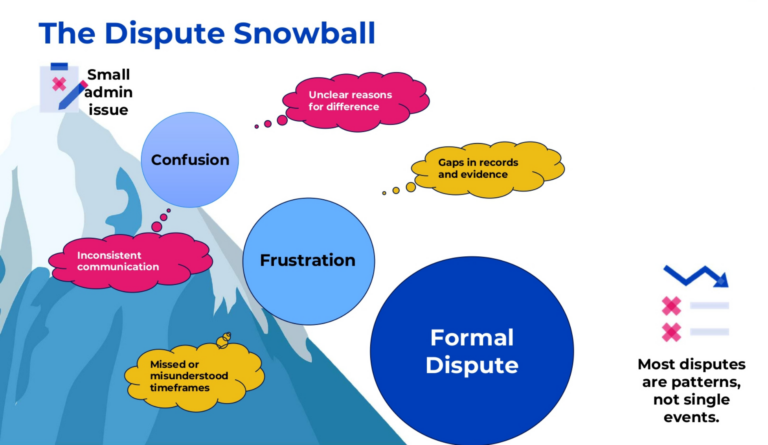
This is the dispute snowball effect — and it’s most commonly driven by breakdowns in:
- progress claim management
- variation handling
- communication and documentation
- payment schedule compliance
Why Progress Claim Disputes Are Increasing
Disputes linked to progress claims are not rare — they’re part of everyday project delivery.
Industry research shows:
- 47% of professionals deal with multiple disputes each week
- 66% experience overbilling or unclear claims
- Many disputes are tied to poor documentation and miscommunication
The common thread isn’t poor intent — it’s inconsistent process.
The Real Risk: Process, Not the Claim
When disputes escalate under state-based Security of Payment Acts (SOPA), the issue is rarely just the claim itself. It’s whether the process behind it can be defended.
Adjudicators don’t assess intent — they assess:
- clear reasons for difference
- supporting evidence
- documented communication
- compliance with timeframes
If that information isn’t clear or accessible, even valid positions become difficult to defend.
Where Progress Claim Dispute Risk Starts in Construction Projects
Most progress claim disputes can be traced back to a few key areas:
- Misaligned contract structures and claim breakdowns
- Variations that are not responded to early
- Vague or high-level reasons for withholding payment
- Poor retention tracking and visibility
- Payment schedules issued late or incorrectly
These are small issues — but they are the starting point of most disputes.
Download the Dispute Prevention Playbook
Understanding where disputes start is the first step. Fixing them requires a consistent approach across your
progress claim workflow, variation management, and payment schedule processes.

Inside, you’ll find:
- The 5 biggest risk areas in progress claims
- What adjudicators expect under SOPA and CCA
- A 10-point checklist to assess your current process